How a part becomes a packet, and a packet becomes parts.
Praetore is a manufacturer with a distributed factory floor. The engineering happens once, centrally; the cutting happens across a network of American shops running one standard. Below is the whole model, end to end.
- For buyers
- A price in minutes, and a ship date written into the order as a contract term backed by money.
- For shops
- We send you the job, not the RFQ. No quoting, no programming, no sales function, paid on delivery.
Two days of machining inside twenty-five days of everything else.
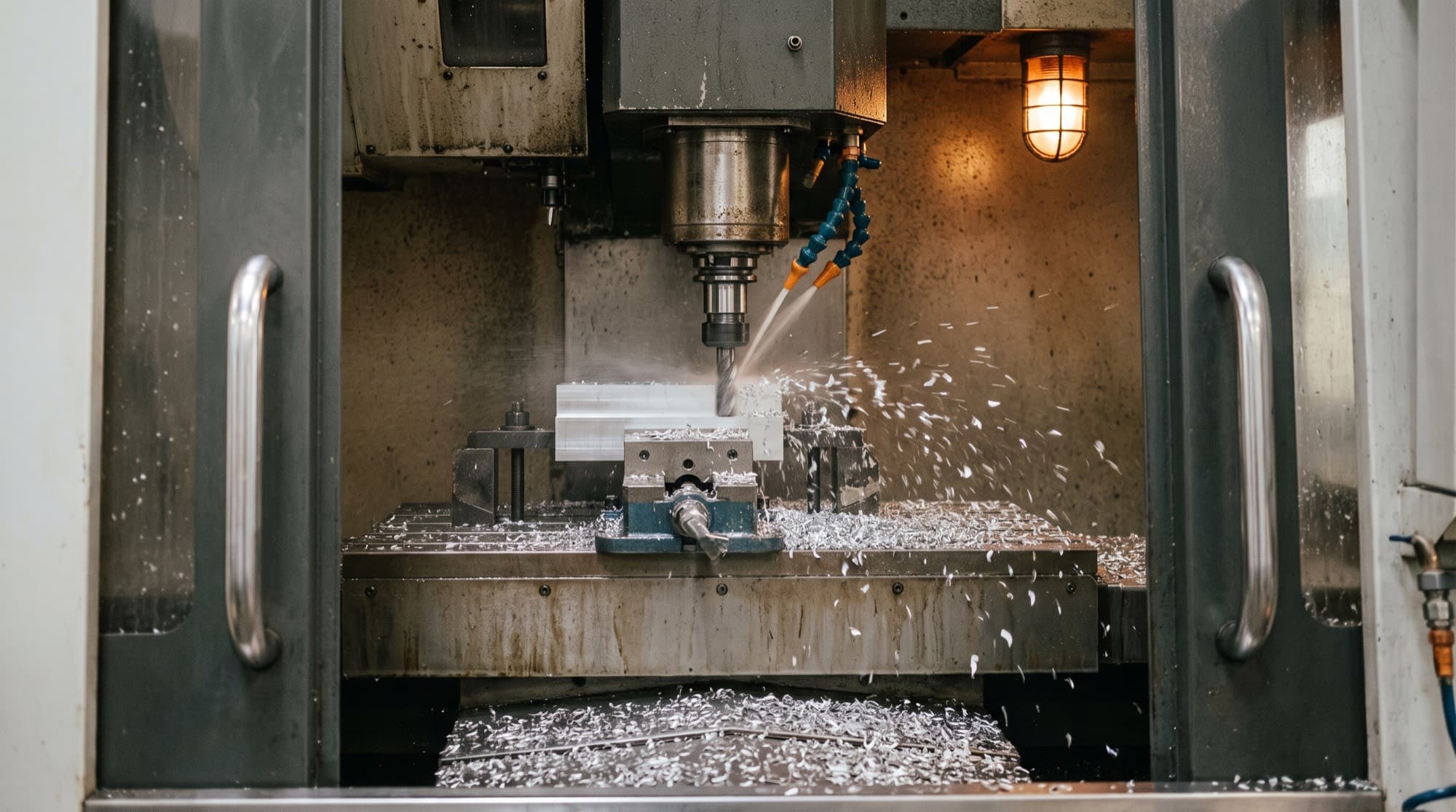
American shops are not slow at cutting metal. US spindle time is roughly at parity with anywhere in the world. The gap is in the hours around the cut — and those are skilled engineering hours, which is exactly the input a low-wage country wins on and exactly the input this country has a worsening shortage of.
The drawing runs the full twenty-five days — scroll it →
Quoting. DFM review. CAM programming. Fixture design. Setup. First article. Inspection documentation. And the coordination that holds all of it together. That ratio is the entire competitiveness gap for low-to-mid-volume precision work, and nobody closes it by making cutting faster.
America doesn't lose at cutting. It loses at everything around the cut. So we deleted everything around the cut.
Every previous attempt to organize American shop capacity attacked a different layer.
Marketplaces
Automated finding a shop. On the other side of the routing layer, every shop still quotes, still programs, still designs its own fixtures, still writes its own inspection reports. Search got faster. The unit being searched for did not change. It is twenty-five days of engineering with better distribution.
Shop software
AI CAM copilots make one programmer faster at one shop, and they work. Sold a seat at a time into the existing structure, they improve shops individually and change the industry's structure not at all — the same engineering work is still done from scratch thousands of times a year across the country.
Superfactories
Centralize the engineering and the machines together, inside new buildings. This also works. It scales at the speed of construction loans, and it competes with the existing industrial base rather than upgrading it. There are roughly forty thousand owner-operated American shops already standing.
The move none of them make: centralize the engineering, distribute the cutting. One engineering core produces complete, machine-ready work. Independent shops contribute the thing they are genuinely world-class at — spindle time, machine ownership, and craftsmanship — and nothing else.
A shop receives this. Not a drawing and a prayer.
Containerization didn't make ships faster. It standardized the interface between cargo and vessel, and everything restructured around the standard. The Job Packet is machining's container: the complete, self-sufficient definition of a job, such that any qualified shop can run it with zero engineering and zero clarifying phone calls.
All twelve artifacts listed below
Twelve artifacts, all mandatory.
Packets are immutable once released; a change creates a new revision with a changelog line, so a shop can always see what changed and why. They are delivered through the shop portal only — versioned, watermarked per shop, and never as an email attachment.
- 01
Cover sheet
Part image, qty, due date, material, runtime per op, special flags
1 page
- 02
Customer print + model
Controlled copies; PMI where available
PDF + STEP
- 03
Process plan
Op sequence, stock spec and lot requirement, machine class per op
Structured doc
- 04
Verified NC programs
Posted to your controller, simulation-cleared, proven feeds and speeds
G-code per op
- 05
Simulation record
Full material-removal sim including holder clearance — the evidence
Video + report
- 06
Setup sheets
Workholding placement, stock orientation, WCS origin, jaw ID, torque
Illustrated pages
- 07
Fixture plan
Soft-jaw programs and jaw stock spec; pallet assignment at v1
Programs + drawing
- 08
Tool list
Type, diameter, stickout, holder class, expected life, substitutes
Structured table
- 09
Probing routines
WCS pickup, in-process checks, final verification with tolerance gates
Macro programs
- 10
Inspection plan
Features, instruments, sample plan, report pre-filled with nominals
Form + CMM program
- 11
Packaging & ship spec
Protection, labelling, cert paperwork checklist, ship-to
1 page
- 12
Acceptance criteria
What done means. The shop's completion tap attests to exactly this list
1 page
Four gates stand between a packet and a shop.
A packet revision does not go live until it clears all four. This is the whole reason a shop can be handed a job instead of a problem.
| # | Gate | What it checks |
|---|---|---|
| 01 | Sim gate | Full material-removal verification. Zero collisions, holder clearance at or above 0.100 in, or explicitly waived per feature. |
| 02 | Tool-crib gate | Every tool is either on the network standard crib list or it ships with the job. No shop hunts for a cutter. |
| 03 | Stranger test | A machinist who has never seen the part can describe the setup and the first-piece process from the packet alone. |
| 04 | Probe-coverage gate | Every guarantee-critical dimension has an in-machine probe check or an inspection-plan feature. Nothing critical is uninspected. |
If a shop has to ask a question to make the part, the packet failed — not the shop.
That is not a slogan, it is the escalation rule. An issue tap in the shop portal summons central engineering with the packet context attached, and the postmortem asks one question: what was missing from the packet. The fix ships as a packet revision, so the same failure cannot repeat anywhere else in the network.
This list is the product.
Any process change that adds an item back to it is a regression, and we treat it as one.
- 01Quote
- 02Program
- 03Design fixtures
- 04Choose tools
- 05Interpret the print
- 06Write inspection reports from scratch
- 07Chase paperwork
Packet before pallet.
A container works because every crane and chassis on earth agrees about the corner casting. Machining's equivalent is workholding — so the network runs one standard, and it arrives as software before it arrives as iron.
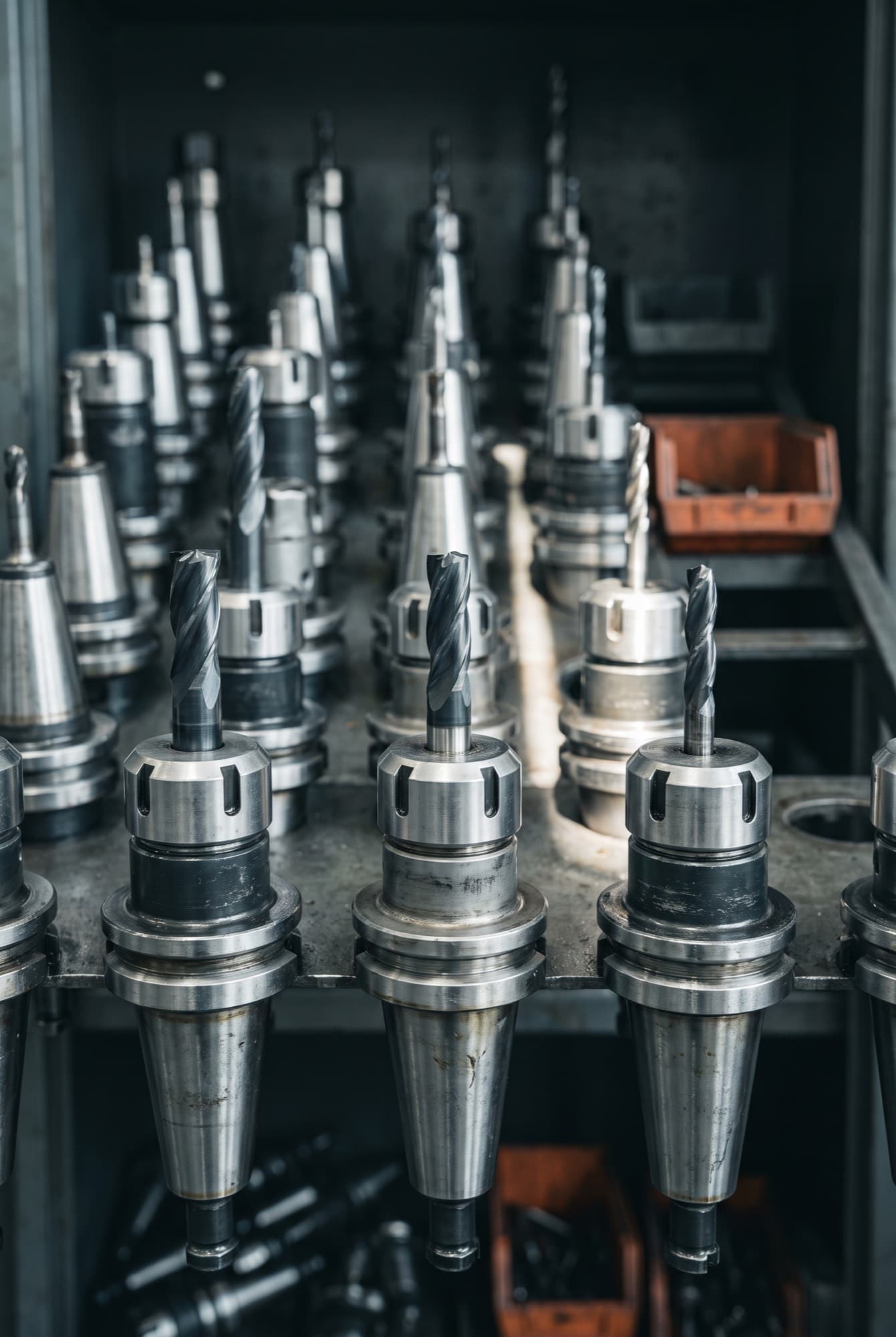
Version 0.1 is a soft-jaw specification on vises a shop already owns. The jaw-cutting program ships inside the packet, so the first job cuts its own fixture. Zero-point pallets come later, financed against routed work, and no shop is ever required to buy them.
The standard, for machinistsQuote, engineer, verify, route, cut, probe — and the data comes back.
Seven stages, and the seventh feeds the first. Every delivered job writes what was promised next to what actually happened, per shop, per packet revision, per feature class. That record is the Capacity Ledger, and it is the only honest way to quote a date and stand behind it with money.
| # | Stage | What happens | Where |
|---|---|---|---|
| 01 | Quote | Automated envelope check, feature extraction, DFM flags. Price and date come off the model. | Central |
| 02 | Engineer | Process design, AI-assisted CAM with engineer review, jaw or fixture design, probe and inspection authoring. | Central |
| 03 | Verify | Full material-removal simulation including holder clearance. Zero collisions, or the packet does not release. | Central |
| 04 | Route | Qualified shops scored on capability match, trust-weighted open capacity, standing, and where the material already is. | Central |
| 05 | Cut | The shop loads the jaws, proves out, and runs the verified program. No programming. No quoting. | Network |
| 06 | Probe | In-machine probe cycles pick up the WCS, gate the first piece, and measure every guarantee-critical dimension. | Network |
| 07 | Ledger | Quoted against delivered — per shop, per packet revision, per feature class. Every job writes a row. | Central |
Three things get better every time a job ships, and they are the three things a buyer feels.
Better routing
The router scores shops on qualification match, feature-class capability, standing, and a trust weight on their declared calendar. Calendar honesty is measured, not moralized: a shop that chronically over-declares simply has its calendar trusted less. Reroute triggers are defined in advance — machine down, probe-gate failure pattern, a calendar diverging from reality — and a reroute means re-posting and re-releasing the packet through the same gates, never emailing a program and hoping.
Better underwriting
A quoted date is constructed, not hoped for: the runtime estimate, the packet revision's own error distribution, the shop's standing, the trust weight on its calendar, and a buffer priced from historical variance for that feature class. A quote is software; a ship date is a machine that has to be free on Tuesday. The instrument that turns the second one into a contract term — the tiers, the caps, and the exhaustive list of what voids it — is published on the guarantee page.
Better prices
Every released packet contributes to a pattern library: operation strategies per feature class, proven feeds and speeds per material and tool pair, jaw program families, probe routine templates. Engineering gets faster because it ships. And a reorder skips the pipeline entirely and goes straight to routing, because the engineering already exists and is already proven.

The Ledger, as of today
The Ledger is populated one delivered job at a time, and it cannot be populated any other way — which is exactly what makes it a moat. A competitor can copy this page. They cannot copy a delivery record, because there is no way to acquire one except by running the work.
Network on-time rate, quoted against delivered, publishes on The Ledger with its methodology beside it — the definition written down before the number it governs.
The whole model depends on shops telling us the truth about their calendars. So here is what their data does and does not do.
- 01A shop’s data wins it work and underwrites it (routing priority, financing eligibility).
- 02It is never used to negotiate that shop’s rates down.
- 03Each shop sees its own standing in full, including exactly how routing priority is computed.
- 04Public and aggregate uses (the Index, capability claims) are anonymized; no shop-identifiable data leaves the network without written consent.
Violating that once would poison the supply side permanently. It is a product constraint, not a policy — which is why it is printed here rather than filed somewhere.
Your part, someone else's part, same stock, same fixture family, one setup.
No single shop sees enough order flow to do this. A network does. It is the machining equivalent of nesting many customers' parts on one sheet — and it is the structural reason network utilization beats any one shop's, which is the reason it shows up in your price.
Drawing scrolls sideways
Five keys, in order of leverage.
| # | Key | Why it matters |
|---|---|---|
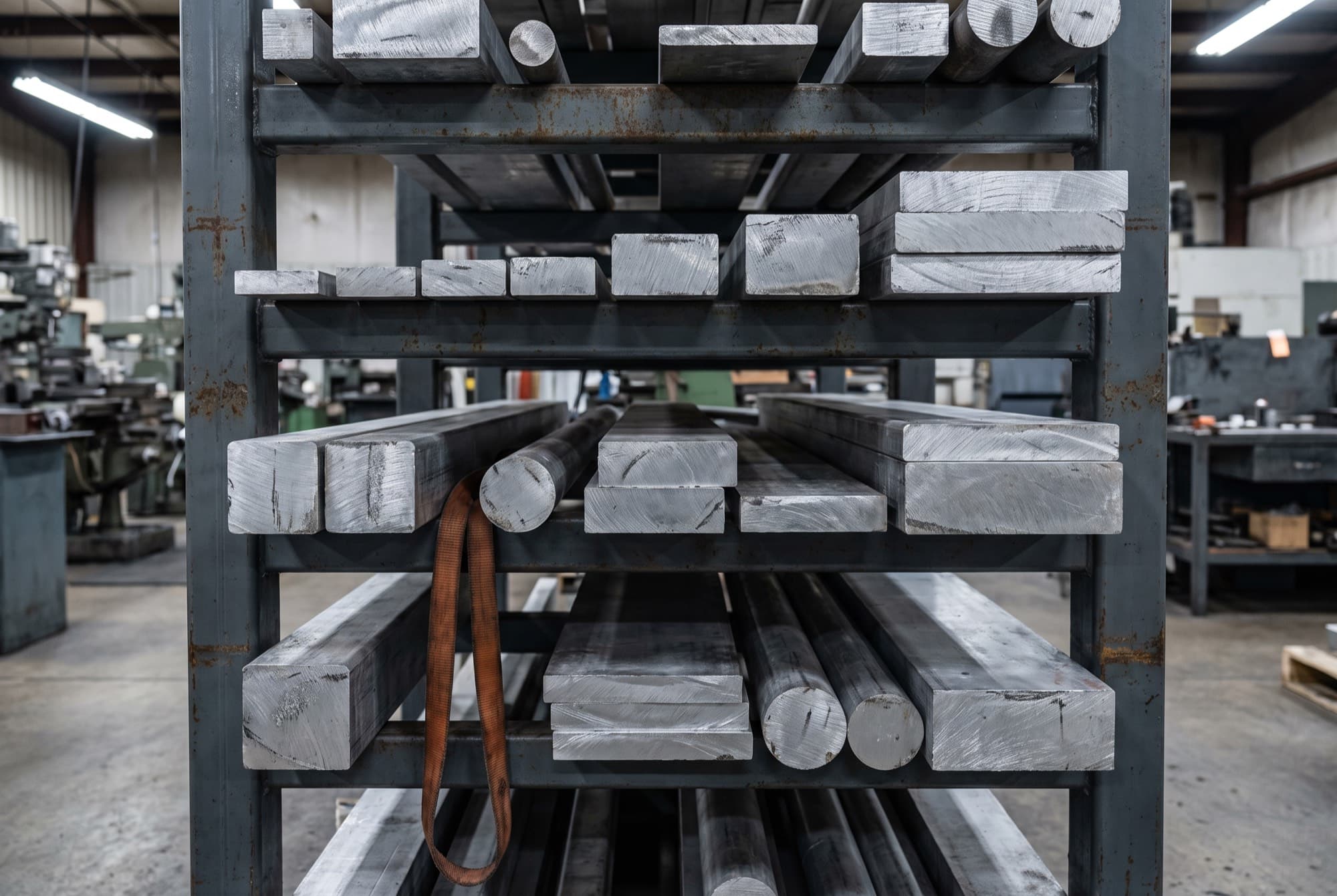
| 01 | Material + stock ladder step | One bar or plate purchase. One lot certificate covers every member of the batch. |
| 02 | Workholding family | The same jaw program family, or the same pallet and fixture. One fixture load. |
| 03 | Tool-list overlap | The batch crib is the union of the member packets. We target at least 70% overlap, so tool changes consolidate. |
| 04 | Tolerance class | A tight-class part does not ride in a standard-class batch. The inspection cadence is different. |
| 05 | Date compatibility | Every member's committed date has to be achievable inside the batch window. If it is not, there is no batch. |
And what blocks one outright
- ITAR segregation
- Customer-supplied material
- Cosmetic-critical finishes sharing a fixture with heavy roughing
- Customer exclusivity terms
Orders never wait for a batch
Batches form around orders, not the other way round. The scheduler holds a rolling three-to-seven-day formation window per key cluster, and a batch fires when the economics clear or when the earliest member's routing deadline arrives — whichever comes first.
Batched or not, the date is the date. The guarantee always outranks the batch.
The split is published on purpose
The saving comes from one setup amortized across members, one material buy and one lot certificate, one fixture load, and consolidated tool changes. It is divided three ways: roughly a third to customer pricing, roughly a third to the shop — paid above solo rate for a batch run — and roughly a third to Praetore. The ratios will be tuned from delivered data; the three-way principle is fixed.
We publish it because the alternative — quietly keeping the whole saving — is exactly how you teach a network to start lying to you about its calendar. A shop has to want the batch.
Traceability never merges
A fired batch compiles into a batch packet with a super-setup sheet and a merged tool list, but the per-member probe and inspection plans stay separate. Every part keeps its own packet lineage, its own material lot linkage, and its own inspection record. A first-piece hold pauses only the affected member where the geometry is independent; a shared-cause failure — fixture, material — pauses the batch.
Batching is a scheduling decision. It is never a documentation decision.
The envelope is narrow on purpose.
A date can only be backed with money inside a design space we can verify before release. Three-axis prismatic parts, a fixed material library, defined tolerance classes. The limits are published as a spec sheet rather than discovered with your part.
Outside it, nothing is refused. It routes to the Sourcing lane: a human inside two business days, a real quote and a committed date.
See the envelopeChoose your lane
I need parts
Upload a model. In-envelope work gets a price in minutes and a date backed by money. Everything else gets a human and a real timeline, from the same company.
Documentation by default · material certs · dimensional reports
I run a shop
We send you the job, not the RFQ. Packets arrive verified, your machinist loads and runs, and you are paid on delivery. No hardware to buy from us. No platform fees. Ever.
No quoting · no programming · no sales · QuickPay terms